
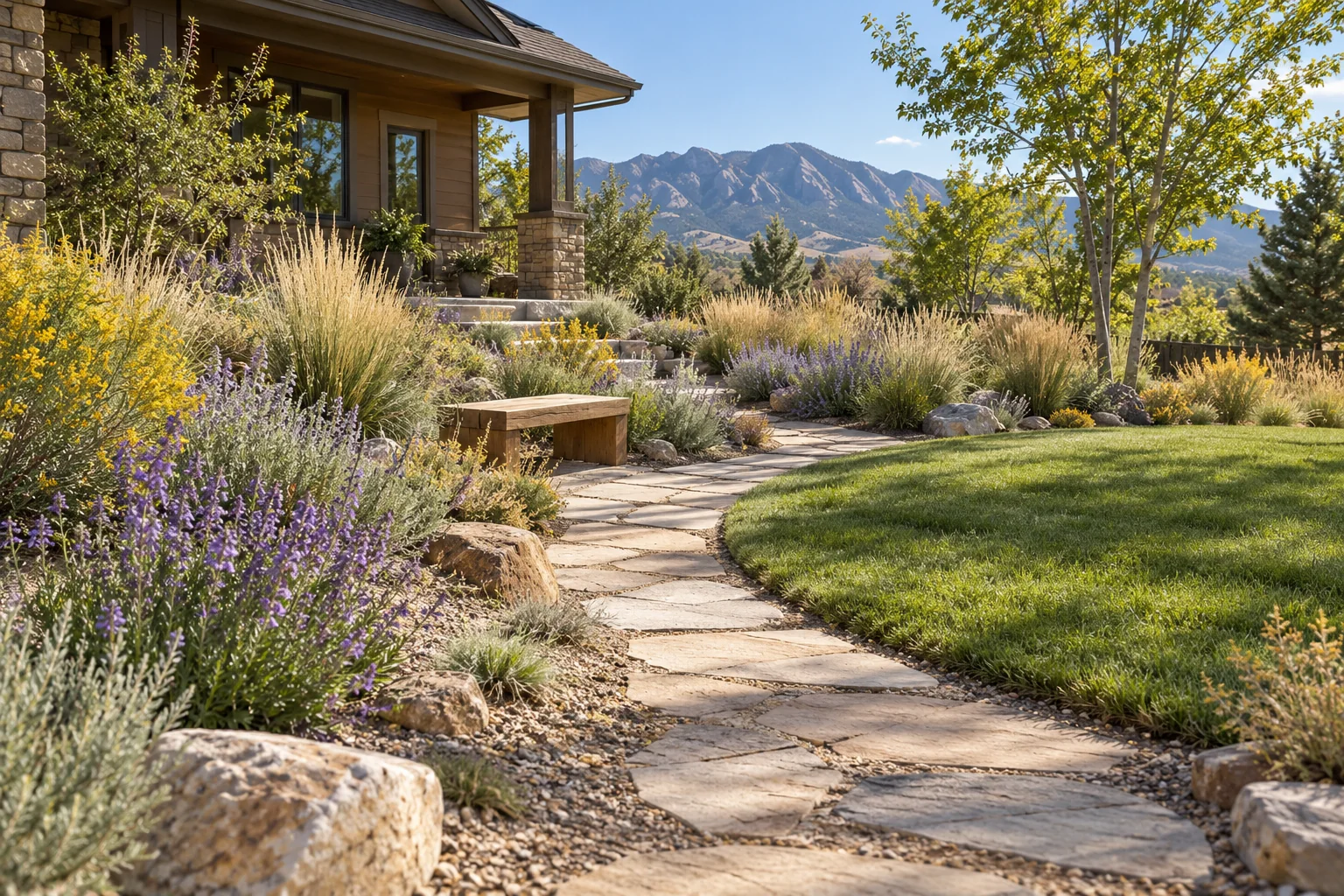
Decide what the lawn is doing
Start a lawn conversion by watching the people who use the yard. A clear patch for play, a comfortable place for a dog or a flexible space beside the terrace can have a genuine purpose. A narrow strip behind the shed may have none. Keeping useful turf while changing awkward parts of the layout often leads to a more satisfying garden than treating the entire lawn as a single decision.
Draw the area people actually occupy, including the routes they take to get there. Do this before choosing a new bed shape. The most attractive boundary on paper can be inconvenient if it leaves a tight corner to mow or puts tall planting across a familiar shortcut. Your first sketch should describe a useful garden with a sensible amount of lawn, rather than simply mark everything to remove.
Find a first phase with a clear boundary
Choose a section that can become complete in itself. A border beside the front walk, an unused corner or a strip along the fence can be easier to manage than opening several disconnected areas at once. Define how the new planting meets the remaining lawn and where a person stands to maintain it. The first phase should look intentional even if the next phase is a year away.
Consider the view from the house and the street. A small change in a visible location can make the whole property feel more considered. Conversely, an ambitious conversion that leaves broad unfinished soil may become a source of frustration. Match the area you open to the preparation, planting and establishment care you can realistically complete during that stage.
Protect the plants you intend to keep
Before removing turf, identify established trees, shrubs and any irrigation that supports them. Mark their locations and discuss protection with the appropriate adviser. Existing tree roots can extend well beyond a tidy ring around the trunk. Work methods, new levels and irrigation changes should account for that living structure, rather than treating the lawn as an empty surface ready for any operation.
Record what watering the retained plants currently receive. Removing a sprinkler zone can change more than the grass if nearby trees have depended on it. A phased plan should include how their needs will continue to be met. Make those arrangements before the old system is capped or redirected, and keep access available for checking the revised irrigation.
Plan irrigation before the new border is planted
CSU Extension’s guidance on retrofitting a yard identifies awkward turf shapes and difficult-to-water spaces as useful places to reconsider. Its irrigation advice also separates lawn from planting with different water needs. Draw those groups while planning the new boundary. A dry-adapted border should not inherit a lawn schedule simply because the pipework is already there.
Ask an irrigation professional to assess the existing system where needed. Identify the valves, how the new area will be watered and how remaining sprinklers avoid paths or gravel. Keep the revised plan understandable: someone should be able to stand in the yard, point to a planted area and know which control serves it. That clarity is valuable long after installation day.
Choose removal and preparation for the actual site
There is no single removal method suited to every lawn. The existing grass, weeds, roots, drainage, access and intended planting all affect the choice. Ask about the method, its timing and the follow-up it requires before work begins. If a treatment is proposed, use qualified advice and follow current product directions. A design article cannot replace that site-specific decision.
Include a plan for persistent weeds and regrowth. A new mulch layer does not resolve every problem beneath it, and new planting can make later correction more awkward. Check soil conditions and the requirements of the proposed palette before adding amendments. Keep material deliveries and machinery out of the areas that are already prepared or contain roots you are trying to protect.
Make the new planting easy to understand
A converted bed can have a strong shape without being crowded. Choose a small group of structural plants, repeat useful supporting plants and leave room for their mature spread. From the path, the arrangement should read as a deliberate border rather than a scattered set of nursery purchases. A clear edge helps connect the change to the rest of the garden.
Budget attention as carefully as materials. New low-water plants still need establishment care, a distinction emphasized in CSU Extension’s retrofit guidance. Decide who will check the planting, adjust water and respond if an emitter stops working. Keep a labeled plant list and simple care notes so that the first season becomes an opportunity to learn about the site.
Use the first phase to improve the next one
Take photographs before work and at intervals afterward. Note whether the remaining grass is easier to maintain, whether the new route feels comfortable and which plants settle well. Record maintenance you had not expected. These observations are more valuable than assuming that every part of the yard should receive exactly the same treatment as the first area.
When you are ready to continue, revisit the overall plan. The next phase might extend the same planted language, simplify another awkward turf edge or improve a connection to the terrace. It may also be reasonable to stop because the garden now works. A successful conversion is measured by a useful, coherent landscape and manageable care, not by removing grass for its own sake.