
Start with habitat, then choose the picture
A flowering border can be beautiful and useful at the same time, but a garden planned for pollinators needs a wider brief than color alone. CSU Extension describes habitat through food, water, shelter and space. That is a helpful way to review a proposed garden: consider what is available throughout the year and which ordinary maintenance decisions affect it.
Begin with one area you can observe closely. It may be a border beside a walk, a sunny patch beyond the terrace or an existing bed that needs a more deliberate planting plan. You do not need to redesign the entire property at once. Give the first area a clear boundary and a useful relationship to the house so that caring for it becomes part of normal garden life.
Map flowering across the growing season
Make a simple table with early, middle and late parts of the growing season across the top. Place potential plants beneath the period in which they are likely to flower locally. Use regional references and nursery advice, and expect weather to influence the exact timing. The table helps reveal a plan that looks abundant in one month but has little to offer before or afterward.
Do not solve every gap by adding another isolated specimen. Consider whether a suitable plant can be repeated in a useful group or whether an existing part of the garden can contribute. Keep the whole border readable from the path. A sequence of flowering plants can be supported by quieter foliage, grasses and structural shrubs so that the space remains coherent between flowering moments.
Choose local suitability before a broad label
Native status is useful information, but it does not describe every condition a plant needs. Colorado has varied elevations, soils and plant communities. Review the site’s light, moisture, available space and intended care along with the plant’s origin. A palette is stronger when the plants can share the conditions they are given, rather than simply meet a category on a shopping list.
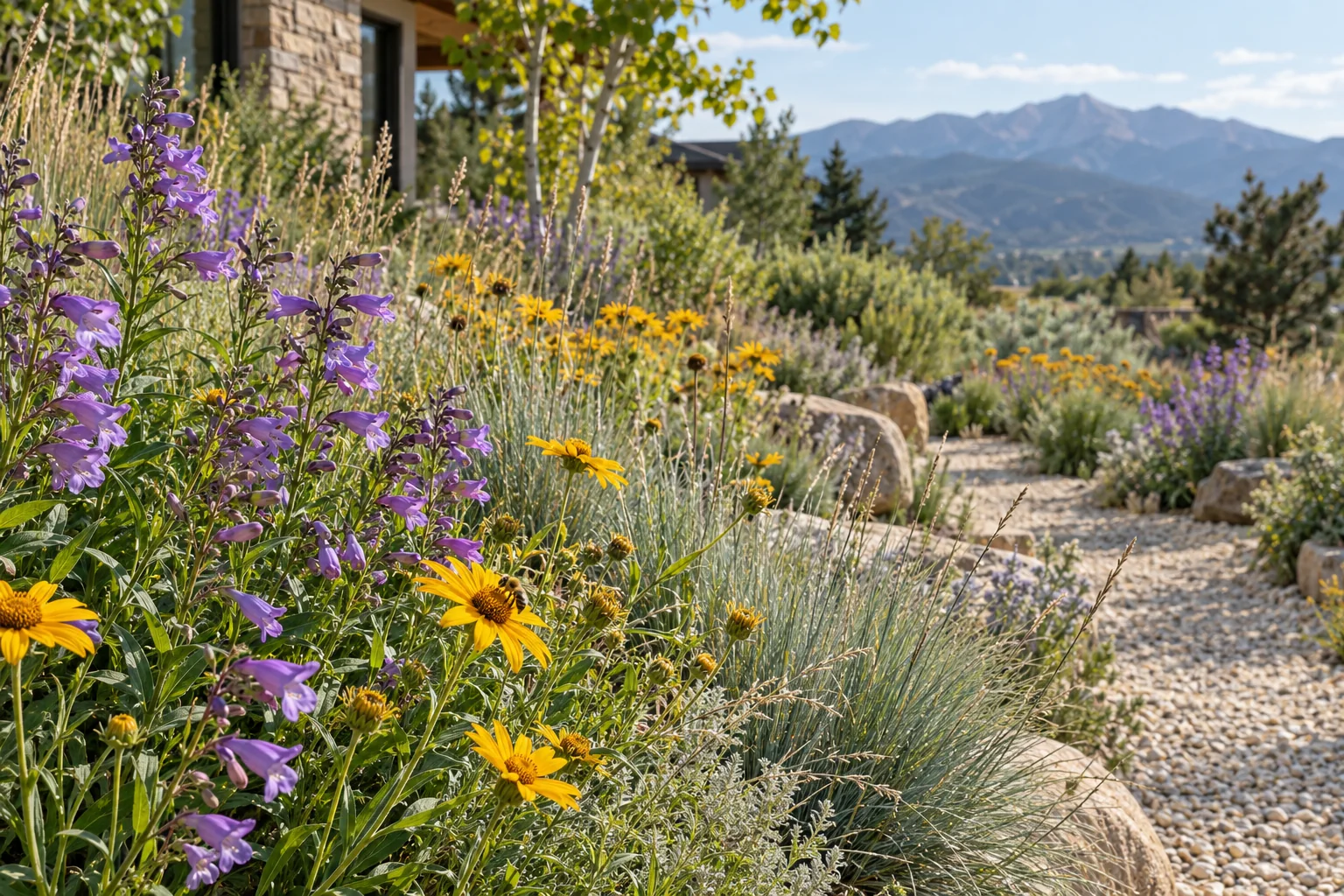
Ask for botanical names when finalizing the list, and keep them in the garden records. Common names can refer to different plants, and cultivated forms can vary. Reliable local habitat references can help guide the selection. Treat a photograph as a description of character and composition; verify individual species before ordering plants for a specific property.
Leave room for different kinds of visitors
Observe flowers from a comfortable distance and notice how varied the visitors are. The familiar honeybee is only one part of the story. CSU Extension’s native-bee guidance discusses nesting in soil and plant material, which makes the ground and stems relevant alongside the flowers. A tidy surface covered uniformly from fence to path may not provide all the conditions you are hoping to support.
Identify suitable places where habitat-oriented care can fit with the property’s other needs. Keep entrances and heavily used paths clear, and consider children, pets and anyone with specific concerns when locating the planting. Fire exposure, plant health and local requirements can affect what material is retained and where. Make these decisions for the setting rather than apply one rule to every garden.
Design a border that people can live beside
A clear edge and a legible path can make a naturalistic border feel cared for without forcing every plant into a clipped shape. Decide where the planting can be generous and where it should stay lower. Near a gate or dining area, leave comfortable passage and room for furniture. Place the richest flowering away from a narrow bottleneck so that people can choose how closely they approach.
Give yourself a good observation point. A modest bench, a view from the kitchen or a widened spot on the path can make the garden more engaging. Leave room to reach the plants for care without creating a maintenance shortcut through the middle. When the border is enjoyable to use, it is easier to notice what is flowering and what may need adjustment.
Review maintenance before reaching for a treatment
When a leaf is damaged or an unfamiliar insect appears, pause long enough to identify what you are seeing. A garden for pollinators will contain insects, and their presence is not itself a diagnosis. Use qualified local advice for a genuine plant-health problem. If a pesticide is being considered, follow current label directions and discuss the effect on the habitat you are trying to support.
Write the maintenance intent down, particularly if someone else cares for the garden. Identify plants to retain, areas that should not be routinely disturbed and the reason for any seasonal decision. A simple labeled plan can prevent a well-intended cleanup from removing the feature you wanted to keep. Review that plan as plants establish and as household needs change.
Keep a record of what the garden offers
Take a photograph from the same position every few weeks during the growing season. Record flowering, visitors you can identify and periods when the border feels quiet. Keep the notes descriptive: a plant was flowering on a certain date, or insects were visiting in the afternoon. You do not need to claim a measured ecological result to learn something useful from attentive observation.
Use that record to make one or two changes each year. Fill a genuine flowering gap, repeat a plant that suits the site or make a maintenance route easier. A pollinator garden is a continuing relationship between planting and care. The most useful plan gives you a way to keep learning while making a comfortable, beautiful place to spend time outside.