
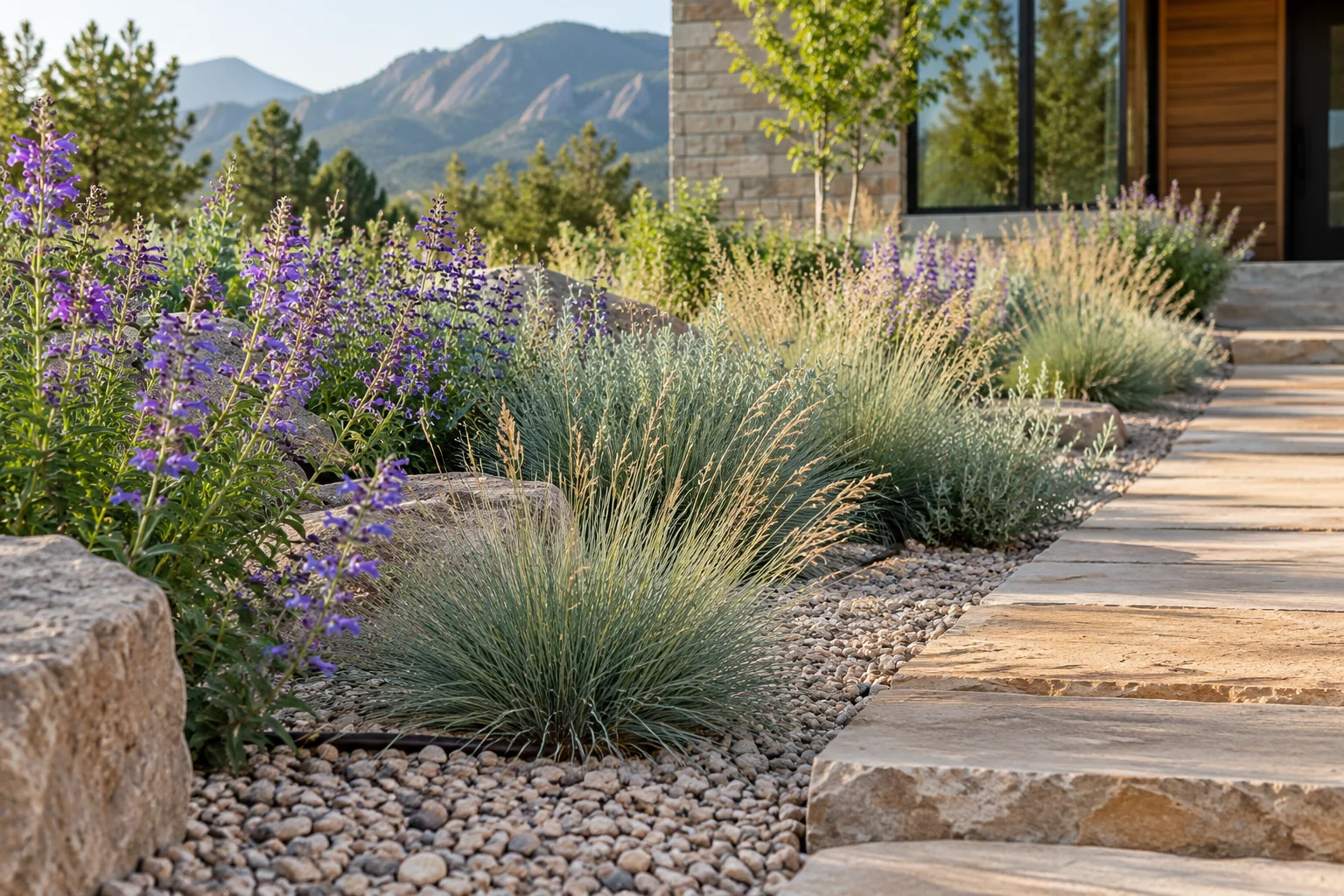
Start with the way you live outside
Water-wise design begins with the whole garden. Before making a plant list, write down the places you actually need: a table in evening shade, a route to the garage, a space for children, a quiet seat or a small kitchen garden. Give each use a location, and notice what you can leave more lightly planted.
A practical patch of lawn may have a real role. The useful question is where it belongs and how much is needed. Colorado State University Extension describes water-wise landscaping as matching the design to the actual use of the site, rather than treating all lawn as automatically wrong.
Read the conditions before drawing the beds
Walk the property at different times of day. Record the areas that receive direct sun, the places shaded by buildings and trees, and any hot reflected light from paving. Note where snow lingers, where wind is strongest and where water collects after rain.
Soil and drainage deserve their own attention. A plant that suits a sunny, freely draining bed may struggle in a shaded low spot. A soil test and a careful look at drainage can help turn a broad style preference into a plan that responds to the actual ground. Site conditions should guide soil amendments, rather than applying the same recipe everywhere.
Group plants by water needs
Hydrozoning means placing plants with similar water requirements together. It gives the irrigation plan a useful structure and avoids watering a dry-adapted planting as though it were a thirsty lawn. Think about these groups while laying out beds, before individual species become fixed.
Also distinguish establishment from long-term care. A plant described as low-water still needs appropriate care while it establishes. Watering should respond to the plant, weather and soil; a calendar alone cannot describe what every bed needs. Ask for guidance appropriate to the plants and the site.
Make room for the mature garden
Consider a plant’s eventual height and spread, not just its nursery-pot size. Leave comfortable walking clearances, protect sightlines at entries, and give trees enough room in relation to the house and other structures. Repetition can create calm without filling every available gap.
Choose mulch for the planting and conditions. Different garden types call for different approaches. Paths, edges and planting should be designed together so that maintenance feels manageable and irrigation serves the plants instead of the paving.
Plan a sensible sequence
A garden can change in stages. Resolve access, drainage concerns and major hardscape decisions before installing delicate planting. If you are converting lawn, define a realistic phase that can be prepared, planted and cared for well.
A useful starting brief includes a few site photographs, a rough plan, your priorities and the maintenance you are prepared to do. Bring those to a design conversation. The goal is an outdoor space that supports everyday life while responding thoughtfully to Colorado’s conditions.