
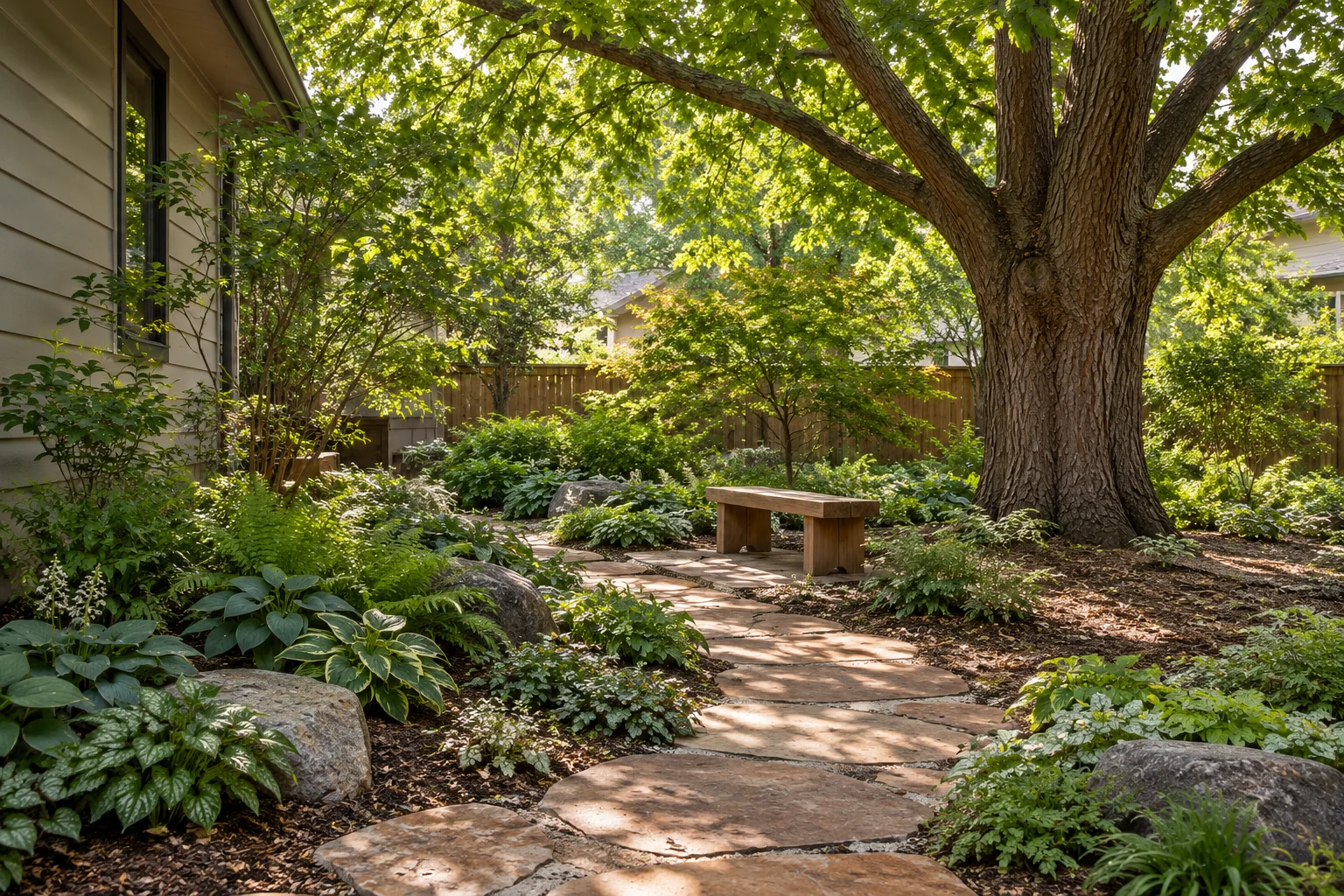
Shade is a changing condition
A north-facing passage, a space beneath a tree and a court shaded by a neighboring building can all look dark in a photograph. They are not the same growing place. Begin by observing when light reaches the ground and what creates the shade. A bed may receive morning sun before the house blocks it, or a brief period of strong afternoon light that changes its character.
Record more than a single hour. Make a simple sketch with observations at different times of day, then add what you know about seasonal change. A deciduous canopy behaves differently before and after leaf emergence. The point is not to turn a homeowner into a light-meter technician; it is to avoid selecting every plant under the broad description of shade and expecting the same result.
Choose an activity that welcomes the conditions
A cool place can be valuable during the hours when an exposed terrace feels uncomfortable. Try a movable chair there before deciding to fill the whole area with planting. It might become a reading corner, a route to a side gate or a simple view from a window. Giving the place a purpose helps determine how much open ground and how much planting it needs.
Notice the less appealing conditions as well. A narrow passage can feel windy, a roof may shelter part of the ground from rain, and an enclosed corner may be awkward to access. Write those observations into the brief. The design can then address the actual experience of the place instead of relying on an image of a lush woodland garden that belongs to another setting.
Understand water before assuming a cool bed is moist
Shade does not reliably mean damp soil. Building overhangs, irrigation coverage and competition from existing trees all influence what happens below the surface. CSU Extension’s irrigation guidance specifically notes that roots can make a tree-shaded area behave differently from shade cast by a building. Check conditions in the ground and understand the existing watering arrangement before adding another planting layer.
Keep observations simple and repeatable. After normal irrigation or rainfall, look at several points rather than just the easiest patch beside the path. If the area behaves inconsistently, record it. Plants with different requirements may need separate positions or a revised irrigation approach. Adding a thirsty palette to an established dry corner should be a deliberate decision with an appropriate care plan.
Work around an existing tree with care
A mature canopy may be the most valuable element in the garden. Do not assume its rooting area is available for excavation, new fill or a paved platform just because the trunk is some distance away. Discuss work near established trees with an appropriately qualified arborist. Protecting the tree can affect the route, surface construction and places where new planting is appropriate.
The best design may use less intervention. A seat outside sensitive roots, a revised maintenance route or a restrained planted edge can make the area useful without turning the whole space over. Identify access for contractors and storage before work begins. The final picture should not come at the expense of the tree that creates the shaded room in the first place.
Build character with foliage and proportion
In a shaded space, leaf size, branching form and the relationship between plants can provide much of the interest. Try combining a limited number of contrasting textures instead of demanding a long flowering display from every square foot. A broad leaf beside a finer form can be enough of an event when the planting is seen closely from a bench or doorway.
Use a plant’s full requirements to guide selection. The shade designation on a nursery label does not resolve moisture, soil, hardiness or mature size. Local perennial references can help narrow the list, and observation of nearby gardens can suggest questions to ask. Keep the palette coherent with the rest of the property, even if this particular bed needs different species.
Let surfaces and boundaries bring lightness
A pale stone sample, a simple timber bench or a quiet wall finish can change how a shaded corner feels. Test materials in place rather than choosing only from small indoor displays. Consider their appearance when wet and their relationship to the house. A surface that appears bright on a sunny terrace may look much softer beneath a canopy.
Avoid compensating for shade with too many decorative objects. Give the eye one clear destination and keep circulation legible. If lighting is part of the brief, coordinate it with safe access, the setting and suitable professional installation. Think about what needs to be seen, where light should stop and how the garden is experienced from neighboring properties.
Make a quiet place easy to care for
Plan how fallen leaves, branches and routine maintenance will be handled without repeatedly stepping through planting. Leave irrigation accessible and give paths enough clear space when plants reach their mature size. A shaded retreat is less restful if a chair constantly needs to be moved to reach a valve or if the only maintenance route crosses the bed.
Keep a seasonal record during the first year. Note the light at the chair, plant performance and any change in the canopy above. Adjust the plan from those observations. A successful shade garden does not need to compete with the sunniest border; it can offer a different tempo, with cooler light, close textures and a comfortable reason to linger.