
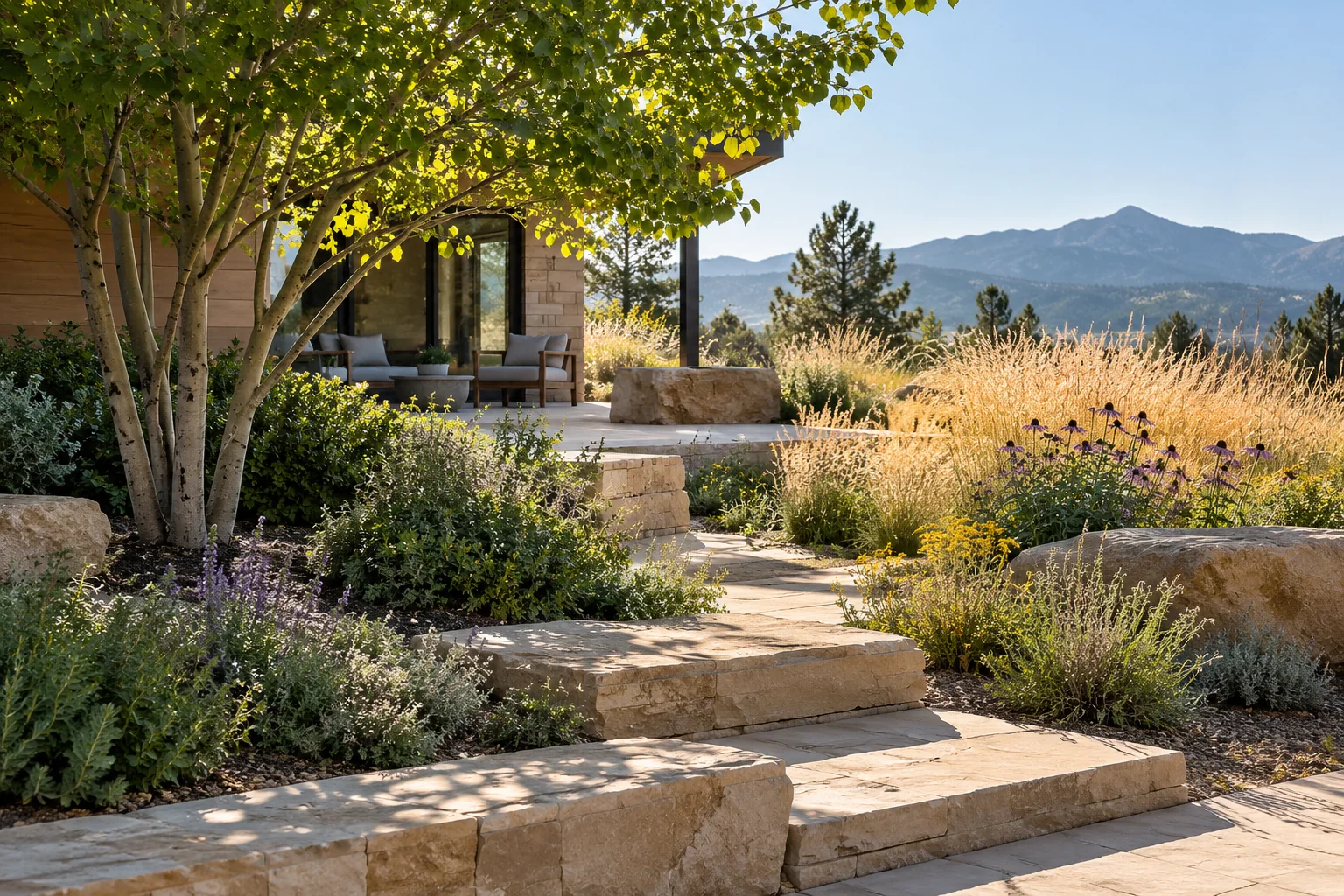
A photograph is an idea, not a planting prescription
A garden image can tell you something useful about the mood you want: loose grasses, a generous tree canopy, a clear stone path or a restrained color palette. It cannot tell you whether those plants will suit your yard. Start by separating the qualities you like from the exact species shown.
Colorado contains very different growing conditions. CSU Extension notes that many native species belong to particular ecoregions within the state. A plant can be native to Colorado and still be a poor match for a specific garden. Local suitability matters more than a broad label.
Map the light you actually have
Look at direct sun across the day, not just at one convenient moment. A south-facing wall, a narrow side yard and an open west-facing bed can create distinct conditions on the same property. Existing trees and neighboring buildings will also change the light as the seasons move.
Write simple observations on a rough plan: morning sun, afternoon shade, reflected heat, exposed to wind. These notes help you choose a plant community that makes sense together. If you are uncertain about a spot, observing it for longer is often more useful than buying a replacement plant immediately.
Understand the ground and available water
Texture, drainage and irrigation all shape a planting choice. Notice whether water drains readily or sits in a low area. A soil test can provide information that appearance alone cannot. Discuss amendments in the context of the garden being created, rather than assuming that richer soil is always better.
Be equally clear about irrigation. An established dry planting, a new tree and a vegetable bed have different needs. Grouping plants by water requirements helps make those differences manageable. Confirm establishment care before planting; low-water does not mean no care.
Give the plant its future space
Check mature dimensions against paths, doors, windows and neighboring plants. A shrub that looks small at installation can eventually obscure a walk or make a narrow garden feel crowded. Trees need particular care in relation to structures, overhead services and the space available for roots.
Think about maintenance as part of selection. Decide whether you enjoy seasonal pruning, dividing perennials or leaving grasses standing through winter. A good palette should fit both the conditions and the attention you can give it. Consider pets and children when discussing plant suitability.
Build a palette with a clear purpose
Choose a few structural plants first, then add supporting layers. Repeated grasses or perennials can connect separate beds and make a modest plant list feel intentional. Use seasonal flowering, foliage and branching form to add variety without turning every bed into a collection of unrelated specimens.
For a design consultation, bring notes about light, soil, water, existing plants and the qualities you want. Plant lists can then develop from a site-specific conversation, supported by reliable local horticultural resources. The most useful palette is one that can grow into the space you have.