
Walk the route before naming the material
The path to the front door, a route to the shed and a place to carry dinner outside do different jobs. Start by describing the movement each surface must support. Will people use it every day, carry heavy things along it or move a wheeled bin across it? Does someone need a particularly firm, smooth route? These questions are more useful than choosing a fashionable material and trying to make every route suit it.
Mark the routes people already take, then decide which should be kept and which need to change. Look at transitions through doors, gates and steps. A beautiful terrace can still be awkward if its main connection narrows at the point where people pass one another. Test the arrangement with rope, existing furniture or temporary markers before fixing the outline.
Distinguish the terrace from the journey
A terrace is occupied; a path is traveled. Draw chairs pulled out and leave room to move around them. For a path, consider the experience of passing planting at its mature size and reaching maintenance access along the way. Some routes can be quiet and narrow in character, while the main connection to the house needs a more generous presence.
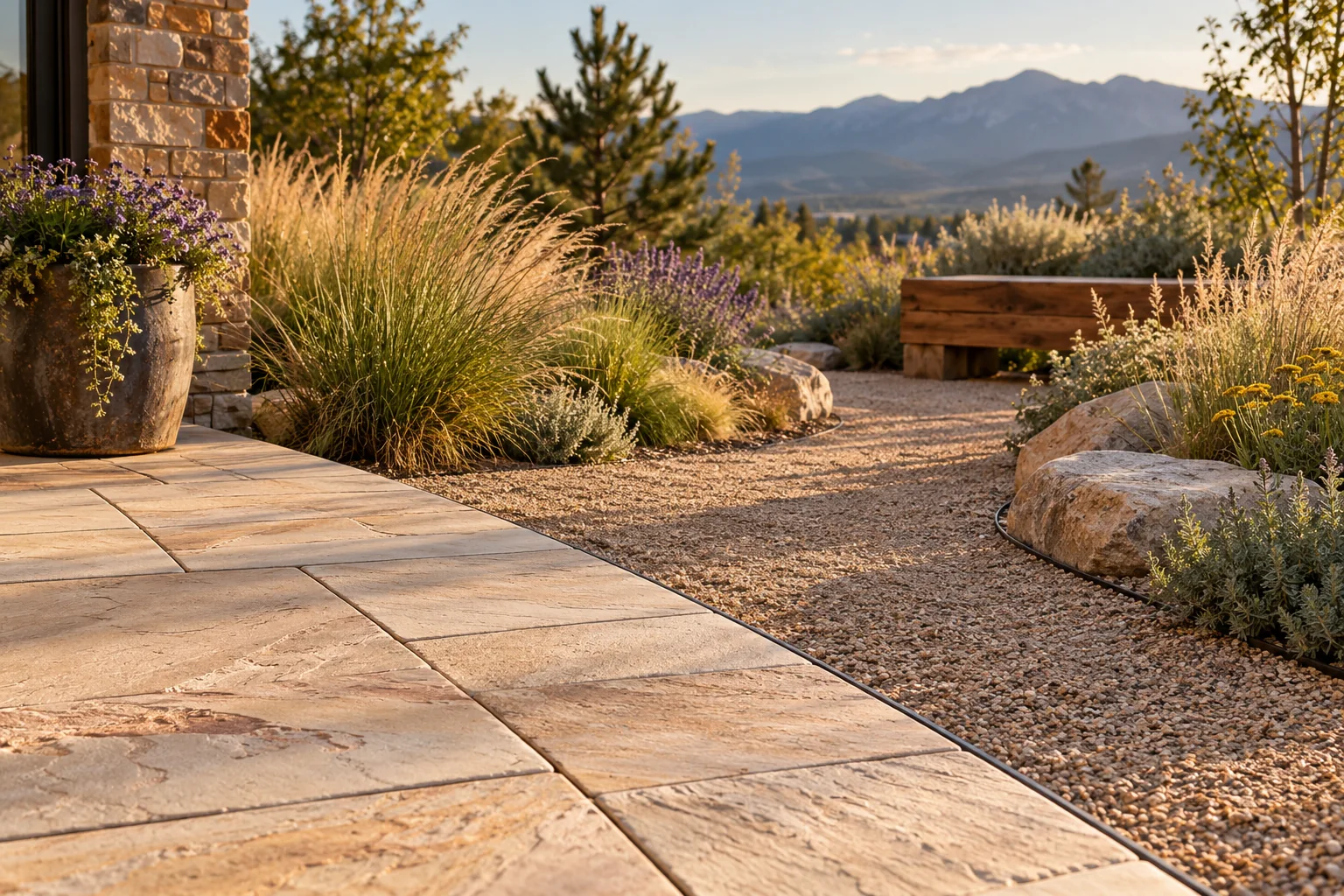
Use materials to support those roles without breaking the garden into unrelated pieces. The same stone can form a broad dining surface and a smaller landing along a gravel walk. Repeating a proportion or edge detail can establish continuity even where the surface changes. Aim for a few deliberate relationships rather than a sample collection of every material you like.
Test a real sample in the garden
Bring samples large enough to show variation. Look at them beside the house, in direct light and in shade. Notice their appearance when wet as well as dry. Pale sandstone can have very different tones within one supply, while gravel that appears neutral in a small bag may become visually dominant across a large area. Make the decision at the scale at which the material will be seen.
Consider texture alongside color. A surface must be suitable for its intended use, footwear and exposure, and any accessibility requirements need their own informed assessment. Ask a supplier or installer about the exact product rather than assume all stone or gravel behaves alike. Keep a record of the selected product and finish so later work can be coordinated with it.
Treat drainage and construction as design decisions
The surface is only the visible part of a built area. Base preparation, levels, drainage and edge restraint influence how it performs. Coordinate those details with an appropriately qualified installer or other specialist. A garden plan can establish the spatial intent, but it should not be mistaken for an engineered solution to a slope, retaining condition or water problem.
Do not assume that loose gravel automatically resolves runoff. The whole construction and site conditions matter. Discuss where water will go, how the surface meets the house and what happens at neighboring boundaries. Check buried services before excavation. Questions that seem technical early in a project often determine whether the finished space remains comfortable and straightforward to maintain.
Give the meeting of materials a clear detail
Edges are where a restrained material palette earns its character. Decide how the terrace meets planting, where gravel stops and how a path joins a step or threshold. A flush, readable transition can make the garden feel calm. Too many little raised edges can create clutter and complicate movement, particularly where chairs or wheels cross a boundary.
Think about how the detail will age. Can gravel migrate onto the terrace? Is the planting likely to soften or cover the edge? Can leaves be cleared without dragging mulch across the path? Ask to see the proposed detail, not just a photograph of the material. A modest, consistent edge often contributes more to the finished garden than a second expensive surface.
Keep planting and surfaces in balance
A path should make it possible to enjoy the planting without squeezing it into leftover gaps. Give borders enough coherent space and allow for mature spread. Near a seat, consider what a person sees and touches at close range. At a main walk, keep growth from turning a generous route into an awkward passage. The relationship will change as the planting develops.
Separate the use of gravel as a walking surface from its use as a mulch. CSU Extension distinguishes surface mulch from materials incorporated into soil and describes different mulch choices for different conditions. A product selected for appearance beside a patio is not automatically the right treatment for every planted bed. Coordinate each use with the needs of the garden.
Choose the maintenance you can sustain
Ask what routine care the proposed surface needs and how it is affected by leaves, weeds, furniture and winter use. Consider where snow will be stored and what methods are appropriate for clearing it. A highly detailed surface with many joints may create a different maintenance commitment from a simpler one. Include those expectations before comparing installation prices.
Finish the selection by reviewing a small set of samples against the whole plan. Does the material help the route feel clear? Does it sit comfortably beside the house? Can the edge be built and maintained sensibly? When those answers align, the surface becomes a quiet framework for outdoor life rather than an object that asks for attention every time you step outside.