
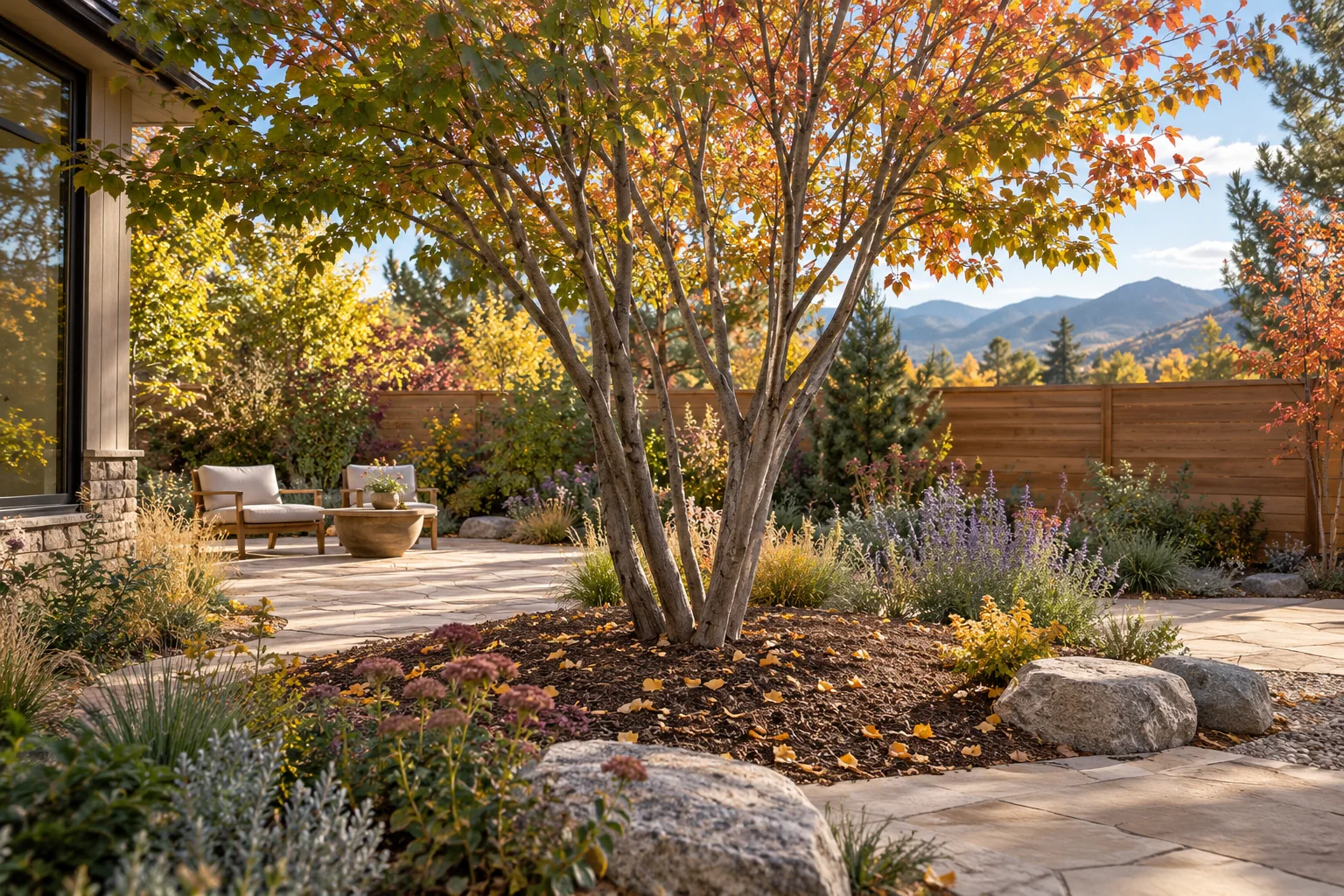
Give the tree a job
A small tree can make an outdoor room feel complete. It may soften the view of a neighboring building, mark the transition from a terrace to planting or bring a light canopy over a quiet seat. Start by naming that job. A tree selected mainly for a memorable flower may not provide the branching shape or seasonal shade that the space actually needs.
Look at the proposed position from the house as well as the garden. A trunk seen through a window can become a strong part of the daily view, while a canopy can frame rather than close an outlook. Test a few positions on a measured sketch. Moving the symbol on paper is easy; moving an established tree later is a very different matter.
Draw the mature canopy, not the nursery pot
Find the expected mature height and spread of the exact plant under consideration. Show that spread on the plan and look at its relationship to the house, overhead services, fences and neighboring planting. The description “small tree” covers a range of forms. A broad multi-stem plant and a narrow upright tree can have similar heights while shaping the garden very differently.
Avoid using repeated pruning as the basic plan for fitting a large plant into a small space. Ask about growth habit and what normal care involves. Branching structure, low limbs, fruit, leaf fall and seasonal appearance all affect whether the tree suits the position. The right selection should have enough room to express its character without making the path or terrace difficult to use.
Read the site beneath the canopy
Sun, soil, moisture and exposure still lead the selection. A sheltered urban courtyard differs from an exposed foothill garden, even when the available space is similar. Use local tree references and discuss the proposed site with a knowledgeable nursery or arborist. Confirm that a plant’s suitability extends beyond its appearance in a catalogue or in a garden elsewhere.
Consider what is already in the ground. Existing roots, drainage, previous construction and buried services can constrain a position that looks generous at the surface. Arrange appropriate utility locating before excavation and get specialist advice where the relationship to structures or established trees is uncertain. A planting position needs enough practical investigation to support the design decision.
Consider shade at the hour you will use it
The most attractive tree in the plan is not automatically in the right place for the afternoon chair. Watch the sun across the intended seating area and note the hours that matter. Consider the likely mature canopy and its seasonal changes. A deciduous tree may create a very different room in summer and winter, which can be part of the appeal.
Think about the time between planting and maturity too. A new small tree will not immediately provide the effect of the mature tree in an inspiration photograph. Movable shade or a different temporary seating position may help during that period. Keep those arrangements separate from the long-term planting space so that a short-term solution does not obstruct the tree’s future form.
Make establishment care part of the purchase
CSU Extension’s care guidance emphasizes that a newly planted tree needs attention to root establishment and appropriate irrigation. Establishment can take several years depending on the plant and conditions. Ask for a care plan before ordering, including how the root ball and surrounding ground will be checked, who adjusts watering and what observations should prompt a call for advice.
Be realistic about household routines. If the garden will be unattended for long periods, resolve that before choosing a tree that needs careful initial care. Keep the plant name, purchase details and instructions together. A larger specimen is not a substitute for suitable preparation and reliable follow-up; the size decision should consider both the desired effect and the care available.
Keep the base of the tree calm
A tree needs a considered relationship to the surfaces around it. Discuss mulch and planting near the trunk rather than letting a decorative finish dictate the detail. CSU Extension’s mulching guidance warns against material piled against trunks. A clear, accessible base also makes it easier to inspect the tree and avoid damage from routine lawn equipment.
Do not crowd the new tree with layers intended to create an instant mature picture. Allow the planting composition to develop. A simpler arrangement can look purposeful while leaving room to check irrigation and care for the tree. If a paved surface or seat is nearby, coordinate construction and roots with appropriate professional input before fixing the detail.
Choose the whole year
Look for photographs or examples of the tree outside its most dramatic flowering period. Branching form, foliage, fruit and winter outline all contribute to the garden. Consider what you see from the rooms used most often, and how leaf fall will affect paths, drains or a dining table. A modest tree with a well-chosen position can have a presence beyond any brief seasonal display.
Bring the measured plan, site observations and intended role to a selection conversation. Ask about alternatives that provide the same qualities if the first choice does not fit. The goal is not to find a universally perfect small tree. It is to choose one that can grow comfortably into this particular place and become a useful part of everyday life in the garden.